
Unifying the fragmented CTV opportunity with HbbTV
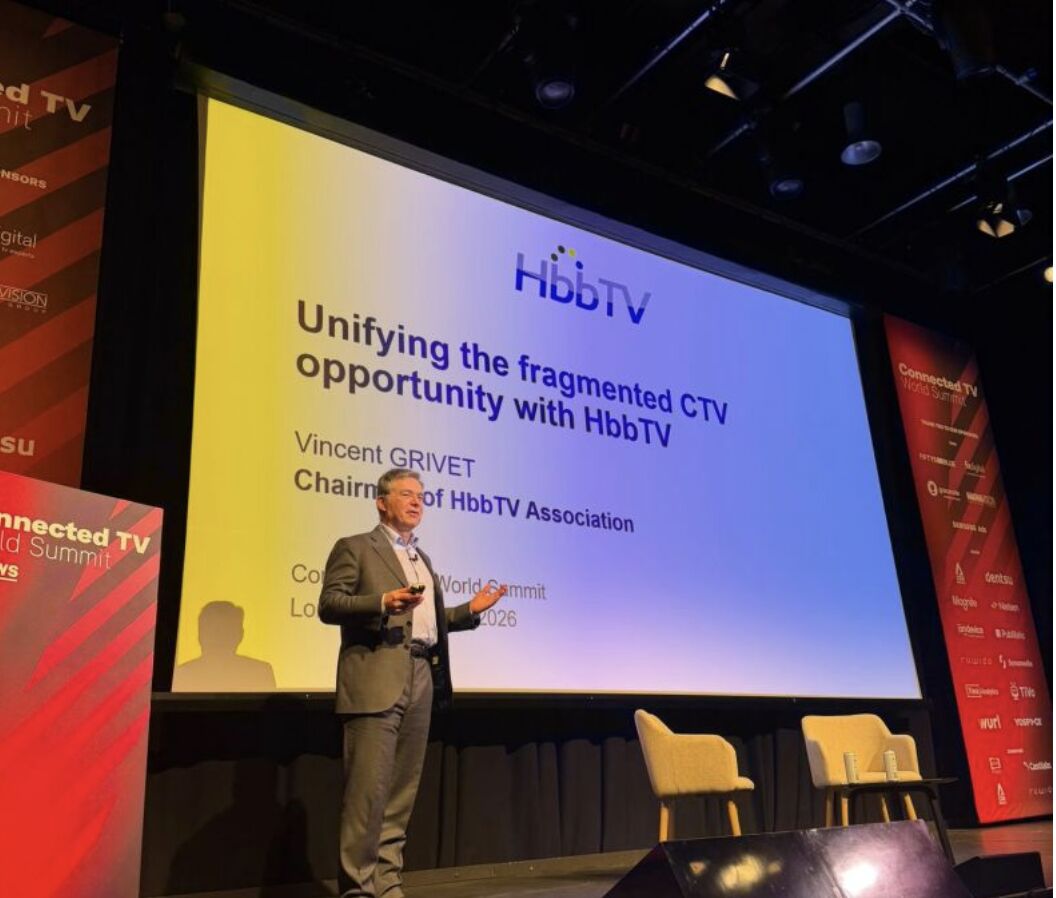
Connected TV World Summit 2026, London
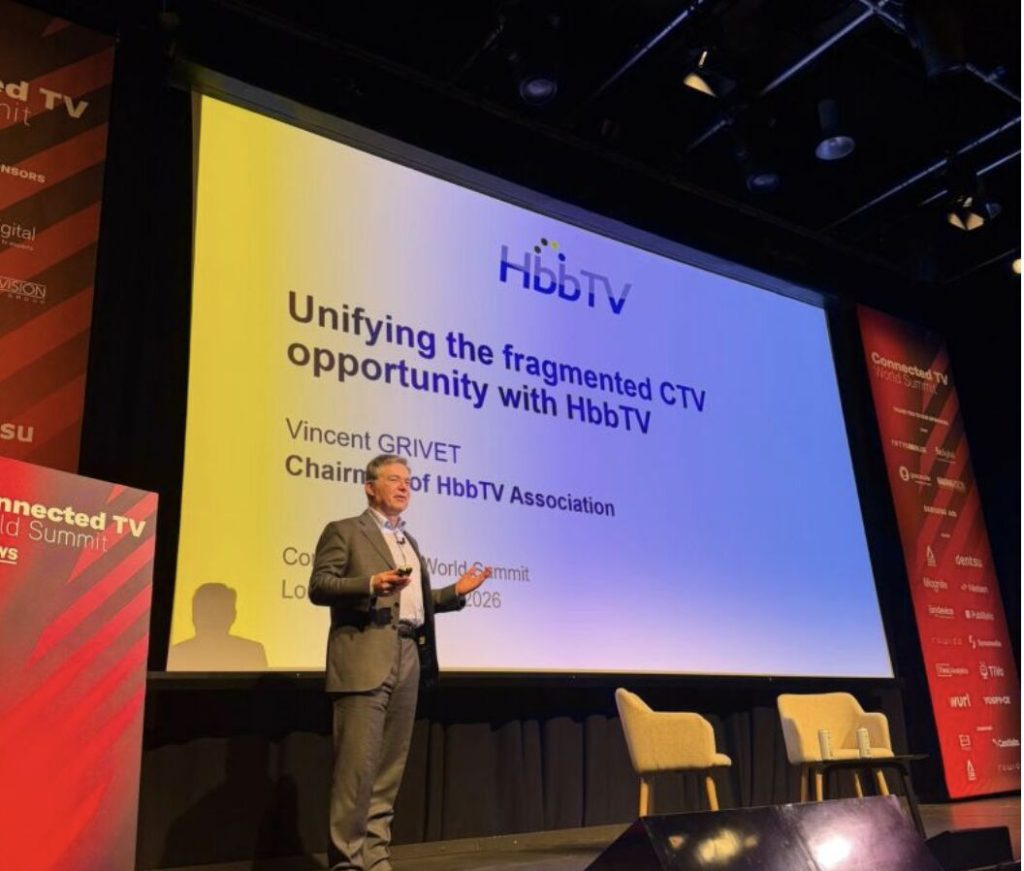
At the Connected TV World Summit 2026 in London, Vincent Grivet, Chair of the HbbTV Association, presented a clear message to the industry: while connected TV (CTV) offers enormous opportunities for broadcasters and advertisers, fragmentation across platforms, operating systems and business models threatens to limit its potential benefits for broadcasters. His presentation, titled “Unifying the fragmented CTV opportunity with HbbTV”, explored how open standards, and HbbTV in particular, can help the industry overcome these challenges and unlock the full value of addressable advertising on television.
A major advertising opportunity in CTV
Grivet began by outlining the scale of the emerging CTV advertising market in Europe. According to the figures presented, CTV advertising already represents around €5.3 billion, of which 47% is captured by broadcasters through their BVOD inventories, compared with approximately €26.3 billion in traditional linear television advertising.
This means that while broadcast television remains a dominant advertising medium, the introduction of addressability into the linear environment represents a major growth opportunity for broadcasters, as addressable advertising sells at a premium against mass broadcast advertising. By combining the scale of broadcast reach with the targeting capabilities of digital advertising, broadcasters can increase the value of their inventory and compete more effectively with global streaming platforms.
The fragmentation challenge
Despite this opportunity, Grivet argued that the CTV ecosystem remains highly fragmented. Broadcasters must typically interact with 10 to 15 different technical environments, each associated with different TV operating systems, app ecosystems and commercial frameworks.
This fragmentation creates several challenges. First, it increases technical complexity and development costs, as broadcasters must build and maintain applications across multiple environments. Second, it reduces the visibility and prominence of broadcaster services within device ecosystems where they compete with many other applications. Finally, it raises concerns around data ownership, advertising control and revenue sharing, as platform operators increasingly set the rules of engagement within their vertical ecosystems.
According to Grivet, this situation risks shifting control away from broadcasters and towards platform operators.
HbbTV as a unifying technology
Grivet positioned HbbTV as a practical solution to these challenges. Developed over more than 15 years by a broad industry consortium, the HbbTV standard enables broadcasters to deliver advanced interactive services through a combination of broadcast and broadband connectivity.
Today the technology operates at significant scale, with more than 100 million reachable homes across Europe and a growing footprint in MENA markets exceeding 30 million households.
Crucially, HbbTV provides a single application environment that works across multiple TV brands and platforms, reducing the need for broadcasters to manage numerous platform-specific implementations. By offering an open and standardised framework, it enables broadcasters to deploy services that are both IP-enabled and independent of proprietary ecosystems.
Enabling addressable advertising on broadcast TV
A central focus of the presentation was HbbTV’s role in enabling addressable advertising within traditional broadcast environments. Since its early versions, the HbbTV specification has supported addressable advertising formats such as overlays and interactive ad experiences or ad replacement (with in most cases replacement of full ad breaks).
These capabilities are already used in multiple European markets, allowing broadcasters to easily integrate with established advertising technologies such as VAST, SCTE signalling and major ad servers while retaining control over their inventory and data.
An important step-up was achieved with the introduction of HbbTV-TA (Targeted/Addressable Advertising), an advanced specification that enables frame-accurate dynamic ad substitution. This technology allows individual advertisements to be replaced within a broadcast stream rather than replacing entire ad breaks.
By enabling ad-by-ad replacement, HbbTV-TA increases the number of billable advertising impressions and improves monetisation opportunities for broadcasters while preserving the viewing experience.
Delivering what advertisers expect
Grivet also emphasised that HbbTV-based advertising fully meets the expectations advertisers now associate with digital and streaming environments as they have been assessed by a recent study from Comcast Advertising across 5 European countries. These include measurable reach, advanced targeting capabilities, real-time analytics and programmatic buying models.
By combining these features with the scale and trust associated with broadcast television, HbbTV creates a powerful hybrid model that bridges the gap between traditional TV and digital advertising ecosystems and opens significant new monetization opportunities.
An open path forward for broadcasters
Grivet concluded by reiterating that while CTV fragmentation and platform gatekeepers present significant challenges for broadcasters, open standards offer a path forward. Through HbbTV, broadcasters can maintain their strategic and business autonomy while still delivering the advanced services and advertising capabilities expected in modern CTV environments.
In doing so, HbbTV helps unify the fragmented connected TV landscape, enabling broadcasters, advertisers and technology providers to fully harness the potential of addressable advertising across Europe and beyond.
A copy of Vincent’s presentation can be downloaded here.