HbbTV innovation showcase: quickfire presentations from the HbbTV Symposium 2025
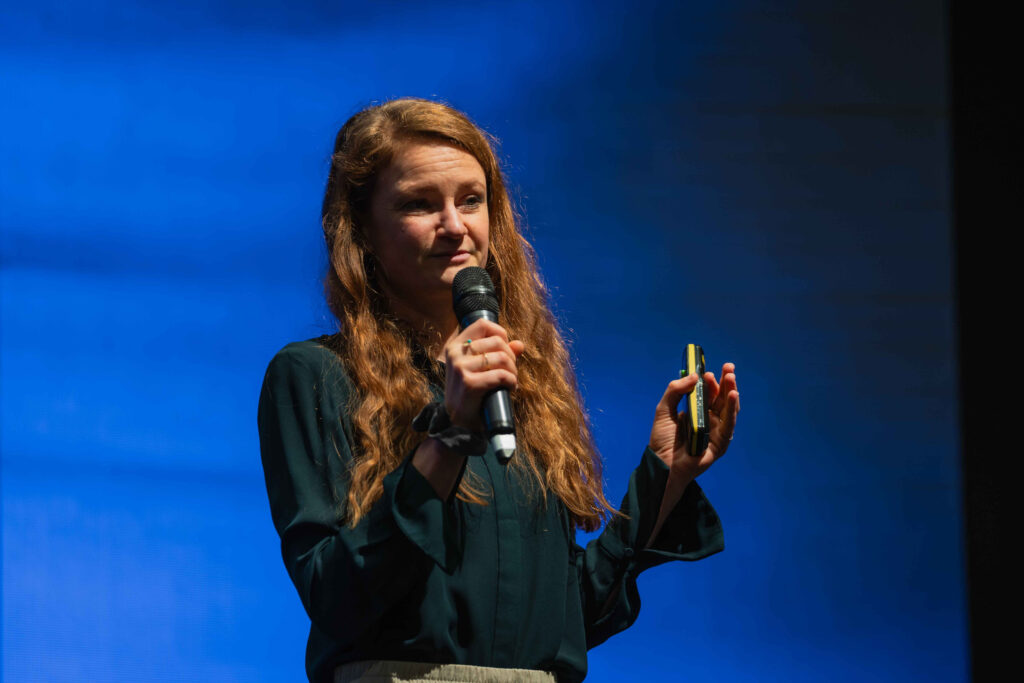
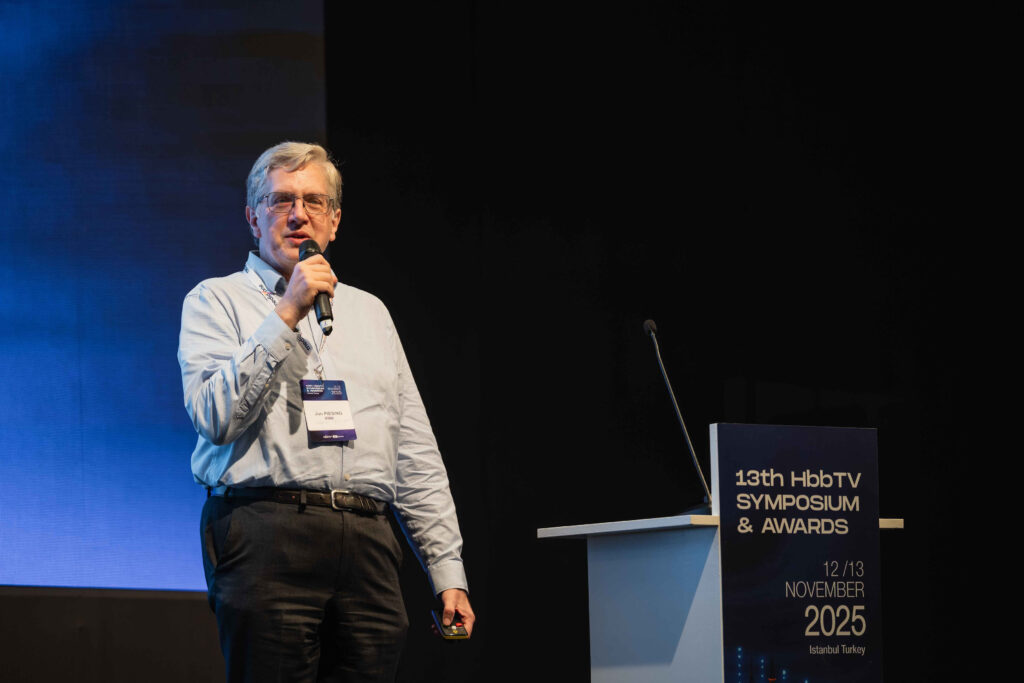
Alongside the keynotes, technical presentations and roundtables, for the first time the HbbTV Symposium 2025 featured a series of quickfire presentations highlighting emerging ideas, innovative projects and future challenges for the HbbTV ecosystem. Covering topics ranging from media authenticity and accessibility to streaming platforms, interoperability testing and application discovery, the sessions demonstrated the breadth of innovation taking place across the industry.
Assuring provenance and authenticity: challenges and solutions for HbbTV
Naomi Schoppa, Research Associate, Fraunhofer FOKUS
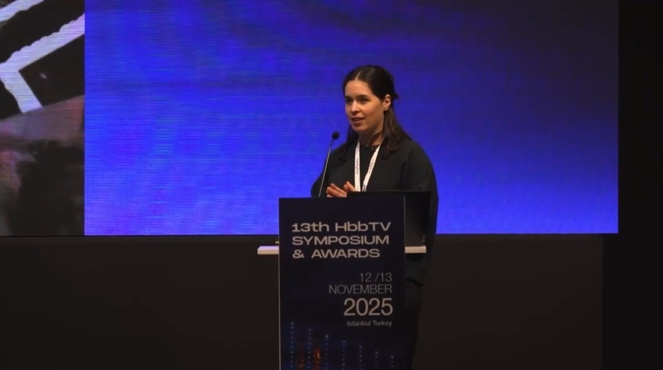
Naomi Schoppa, Research Associate, Fraunhofer FOKUS
Naomi Schoppa addressed one of the most pressing challenges facing the media industry: how to maintain trust in digital content in an era of AI-generated media, deepfakes and disinformation. As content becomes easier to manipulate, audiences increasingly question whether the images and videos they see can be trusted.
Schoppa outlined the growing threat posed by misinformation, disinformation and fake news, alongside technical attacks such as signal hijacking and compromised media platforms. In response, she highlighted the importance of provenance and authenticity data, metadata that can record where content originated and how it has been modified throughout its lifecycle.
A range of technical approaches already exist, including digital watermarking, fingerprinting and embedded provenance information. The challenge now is how these technologies can be integrated into broadcast and streaming ecosystems. Schoppa posed an important question for the HbbTV community: should future standards define how authenticity and provenance information is transported, verified and presented to viewers? As media consumption increasingly spans broadcast, OTT and social platforms, ensuring trust in content may become a critical requirement for future television services.
Watch the presentation and explore further
You can watch the full quickfire talk from the HbbTV Symposium 2025 here: Watch the Video
The presentation slides are also available to download: Download the presentation
Sign language on DTT with WebAssembly decoding in HbbTV
Rafael Bermúdez, R&D Team Product Owner, 3Cat – CCMA
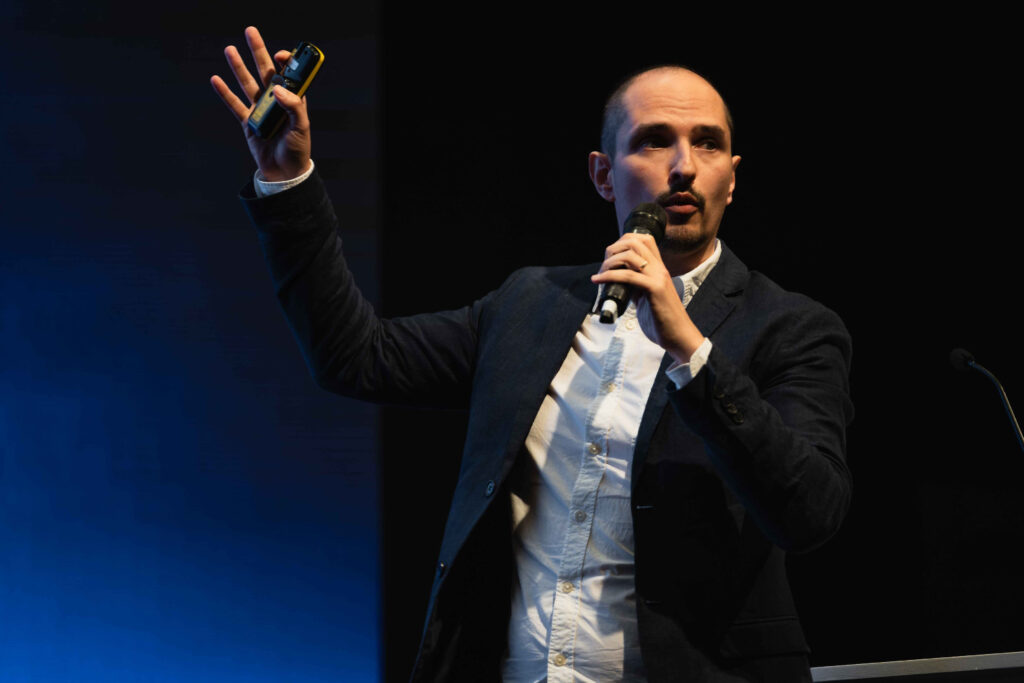
Rafael Bermúdez, R&D Team Product Owner, 3Cat – CCMA
Rafael Bermúdez presented an innovative approach to improving accessibility by delivering sign language services through HbbTV. His goal was simple but ambitious: to make sign language as easy to access and personalise as subtitles are today.
Traditional sign language services often rely on dedicated broadcast channels, limiting flexibility and scalability. Bermúdez described a hybrid approach in which the main television programme is delivered via DTT, while the sign language video stream is delivered over broadband and synchronised using HbbTV technologies.
To overcome technical limitations, the solution uses WebAssembly (WASM) to decode a secondary video stream directly within the HbbTV application. Combined with low-latency DASH delivery and HbbTV Media Synchronisation, this allows sign language content to remain synchronised with the broadcast programme while offering viewers control over size, position and presentation.
The solution is built entirely on open standards and has been demonstrated across a wide range of HbbTV devices. Bermúdez called for wider industry collaboration to standardise sign language delivery as a first-class media component, alongside subtitles and audio description, making accessibility services easier to deploy and use across the industry.
Watch the presentation and explore further
You can watch the full quickfire talk from the HbbTV Symposium 2025 here: Watch the Video
The presentation slides are also available to download: Download the presentation
The new ZDF streaming portal
Amelie Jakob, Product Owner HbbTV, ZDF
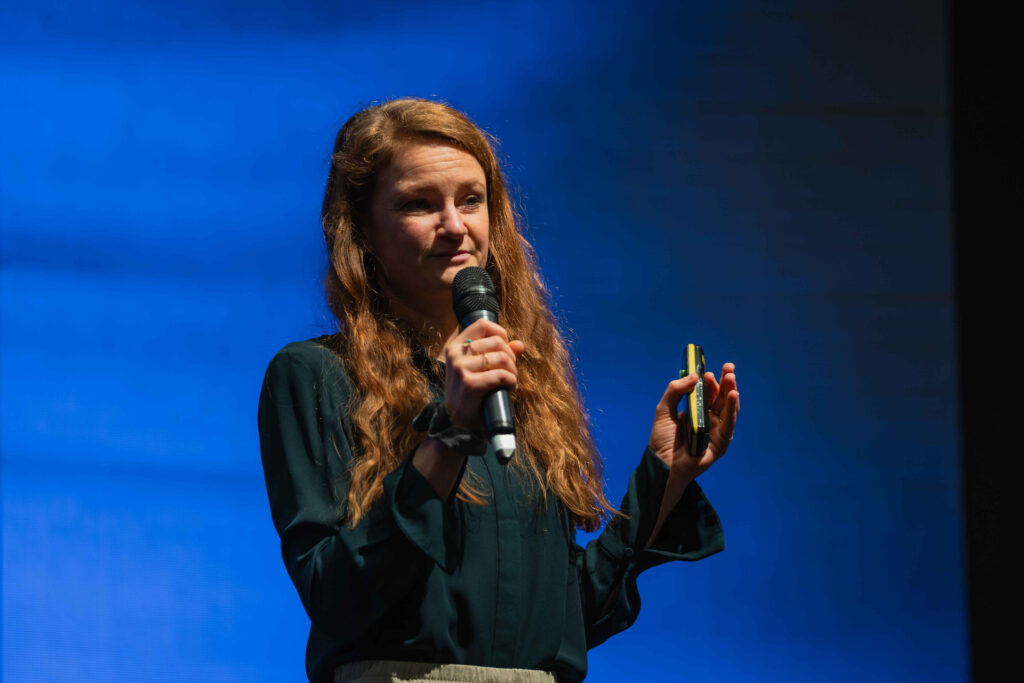
Amelie Jakob, Product Owner HbbTV, ZDF
Amelie Jakob provided an overview of ZDF’s newly launched streaming platform, representing a significant evolution in the German broadcaster’s digital strategy.
For the first time, ZDF adopted a “big-screen first” approach, placing connected TVs and HbbTV devices at the centre of the user experience. The aim was to move beyond the traditional concept of a broadcaster catch-up service and create a true streaming platform capable of competing with commercial streaming providers.
A key part of the transformation was a complete redesign built around metadata. New recommendation algorithms, automated content organisation and enhanced personalisation capabilities are all driven by a richer metadata structure. The platform also introduces larger visuals, autoplay trailers and improved content discovery features designed specifically for television viewing.
Jakob also highlighted innovations such as sustainability settings, which allow viewers to reduce the environmental impact of streaming, and enhanced support for live events and channels. Perhaps most importantly, the platform is delivered through a single code base that supports more than 30 platforms and over 10 operating systems, helping ZDF navigate the increasingly fragmented smart TV landscape.
Watch the presentation and explore further
You can watch the full quickfire talk from the HbbTV Symposium 2025 here: Watch the Video
The presentation slides are also available to download: Download the presentation
Advancing HbbTV interoperability: latest developments in the CTA WAVE Streaming Media Test Suite
Louay Bassbouss, Senior Project Manager R&D, Fraunhofer FOKUS
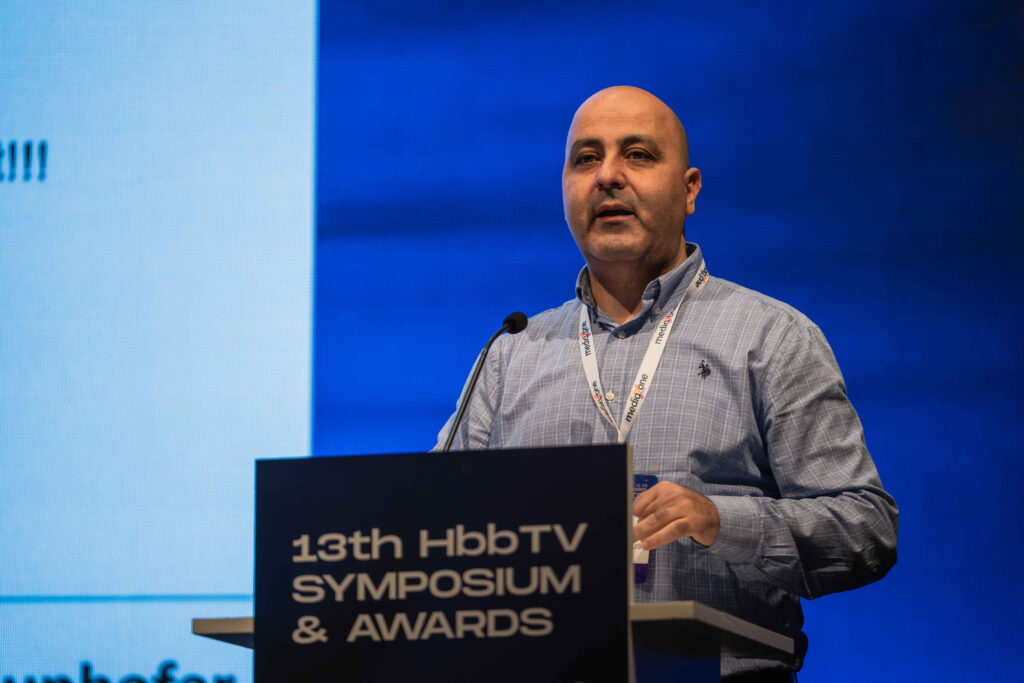
Louay Bassbouss, Senior Project Manager R&D, Fraunhofer FOKUS
Louay Bassbouss provided an update on the Consumer Technology Association (CTA) Web Application Video Ecosystem (WAVE) Streaming Media Test Suite, an important industry initiative aimed at improving interoperability across connected TV devices.
The CTA WAVE project focuses specifically on media playback, testing implementations of technologies such as Media Source Extensions (MSE), Encrypted Media Extensions (EME), adaptive streaming and DRM systems. Unlike traditional manual testing, the framework automates much of the validation process, using video capture and analysis to measure playback performance, startup times and compliance.
Over the past year, the project has introduced a major new release featuring expanded test coverage, improved documentation and additional support for audio-only services. Significant work has also been undertaken to improve testing of HEVC, HDR and commercial DRM implementations.
Bassbouss highlighted the close collaboration between CTA WAVE and HbbTV, with elements of the test suite already contributing to HbbTV interoperability efforts. As streaming services become increasingly sophisticated, robust testing frameworks will play a vital role in ensuring consistent experiences across the growing range of connected TV devices.
Watch the presentation and explore further
You can watch the full quickfire talk from the HbbTV Symposium 2025 here: Watch the Video
The presentation slides are also available to download: Download the presentation
Tracking global adoption of HbbTV with ADB
William Cooper, Chief Executive, Service List Registry
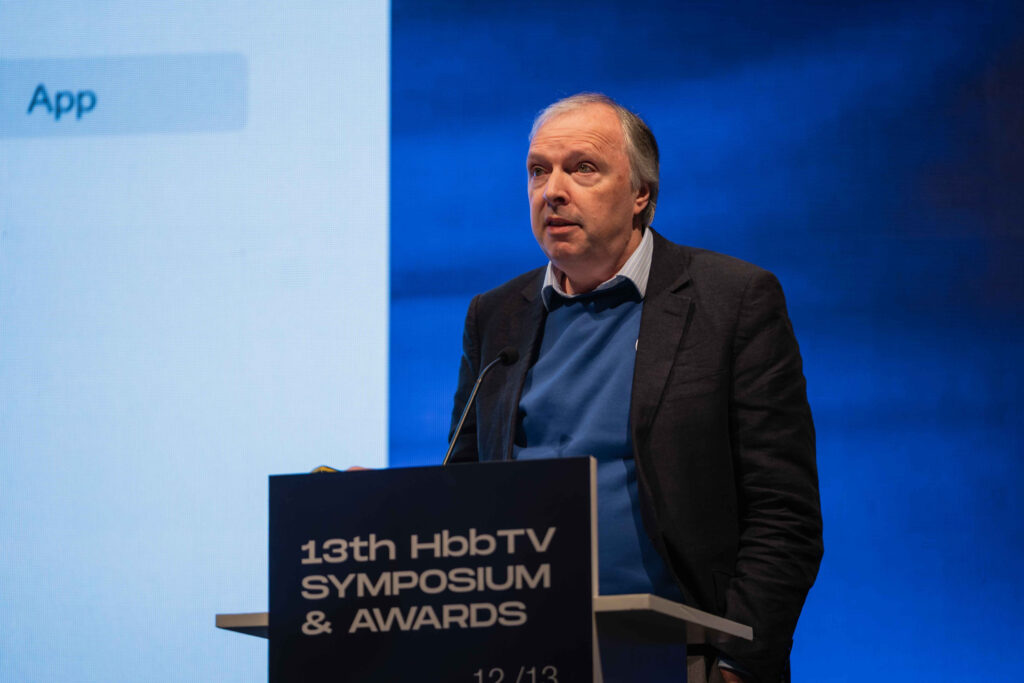
William Cooper, Chief Executive, Service List Registry
William Cooper concluded the session by examining how Application Discovery over Broadband (ADB) is providing new insights into the global adoption of HbbTV.
ADB allows HbbTV devices to discover and launch applications over the internet without relying on broadcast application signalling. Operated through the Service List Registry, the system acts as a global discovery mechanism, resolving service identifiers into application locations using standard DNS infrastructure.
The scale of deployment is already significant. Cooper revealed that the registry processes around half a million requests every hour, equating to approximately 10 million requests per day. This provides valuable insight into where HbbTV-compatible devices are being used around the world and which services viewers are accessing.
The data highlights strong adoption not only in established HbbTV markets such as Germany, Italy and the UK, but also in countries where HbbTV services are less visible. Cooper argued that service providers could gain additional value by registering services, enabling application discovery, collecting anonymous usage insights and extending support for enhanced services such as addressable advertising.
As television services increasingly move online, ADB demonstrates how HbbTV can support discoverability and interoperability beyond traditional broadcast environments.
Watch the presentation and explore further
You can watch the full quickfire talk from the HbbTV Symposium 2025 here: Watch the Video
The presentation slides are also available to download: Download the presentation
Next in the series
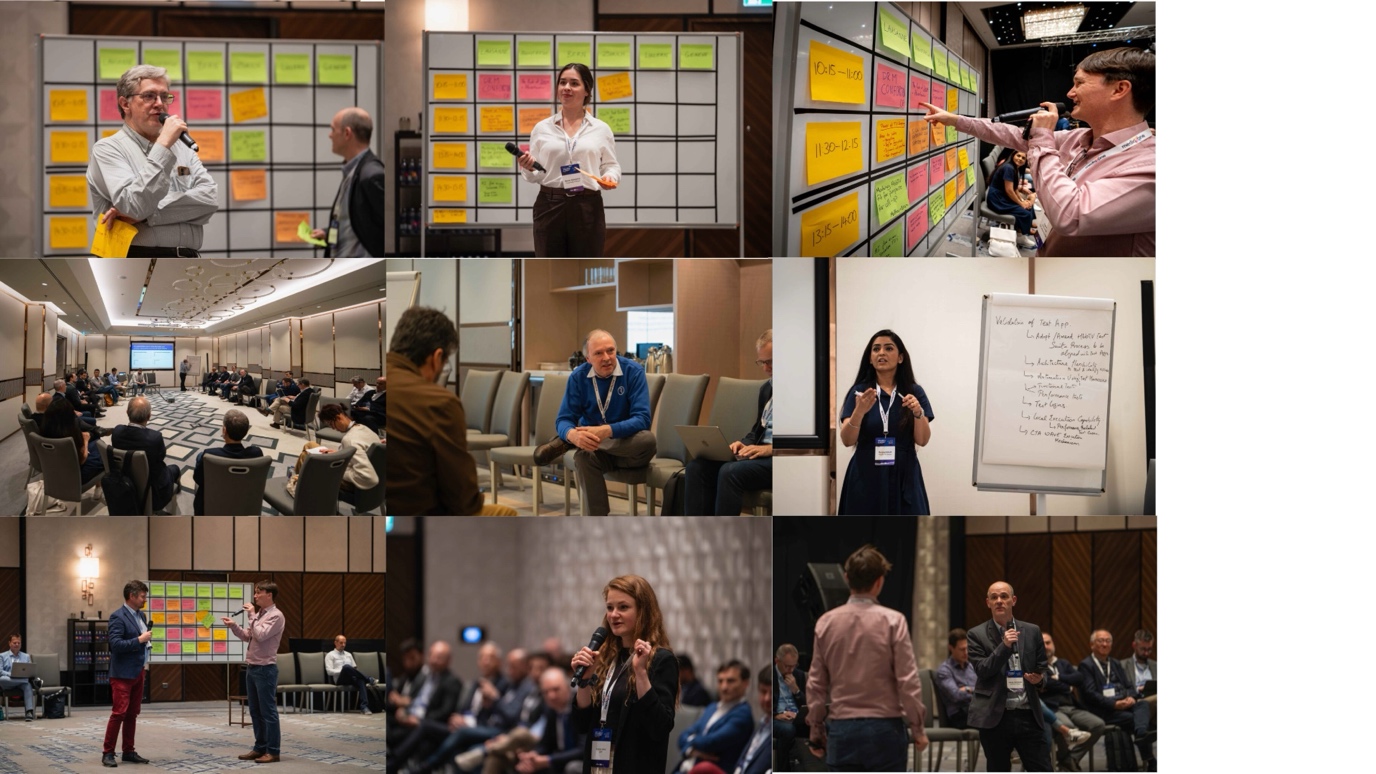
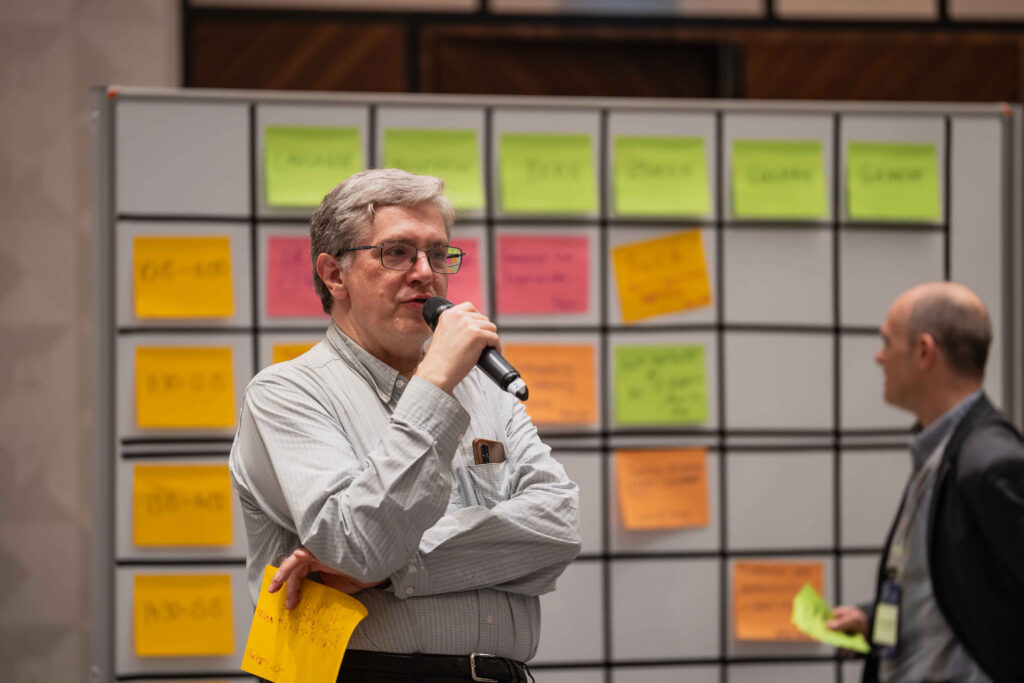
Several of the ideas introduced during the Symposium’s quickfire presentations became the focus of deeper discussion during the unconference on the second day. Topics including media authenticity, enhanced sign language services, AI-powered television experiences, sustainable streaming and Application Discovery over Broadband were explored in greater detail as delegates worked together to identify future requirements, potential standards activities and opportunities for industry collaboration. In the final article in our HbbTV Symposium 2025 series, we report on the unconference discussions and the key themes that emerged from this